
Rule of thumb: if it can hurt someone or fail without warning, fix it now; if it just looks dated or moves a little slower than new ones, it can wait. That one sentence should settle most of the argument, but there are real exceptions worth knowing before anyone spends money or decides to "just leave it."
What to retrofit now, no debate
- Torsion springs with no safety cable. Older systems sometimes don't have a cable running through the spring to contain it if it snaps. A spring under tension that lets go without a cable can send metal flying. This is a same-week fix, not a someday fix.
- Openers without auto-reverse or photo-eye sensors. If your opener predates the mid-90s safety standards, it may not stop and reverse when something is in the door's path. This matters double if you've got kids, pets, or just a habit of pulling in before the door finishes opening.
- Glass panels that aren't tempered. Original glass inserts from decades ago are sometimes just regular glass. If a ball, branch, or earthquake-related shift cracks it, you want it breaking into small dull pieces, not shards.
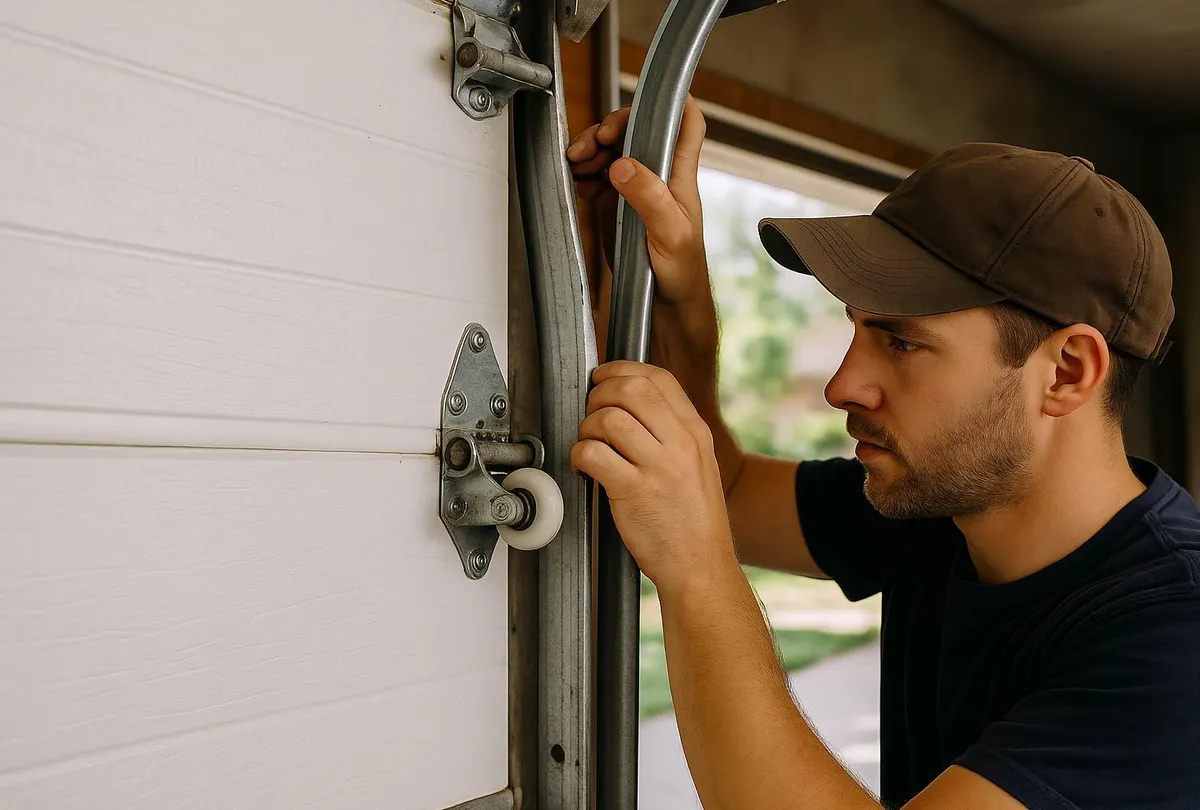
- Panels or tracks with visible rust-through or bent sections from an old impact. A door that still opens and closes can still be structurally compromised. If the track is bowed or a panel is buckled, the door isn't balanced the way it should be, and that puts extra strain on the springs and opener.
What you can leave alone
- The look. Wood grain steel, raised panels, an opener that's loud but reliable — none of that is a safety issue. Cosmetic dissatisfaction is a different conversation than safety.
- Manual doors with no opener. A heavy door you lift by hand isn't inherently dangerous if the springs are properly balanced and in good shape. Plenty of older homes run this way fine.
- Original hardware and rollers, if they're not grinding or seized. Steel rollers on an old track can still run smoothly for years with regular lubrication. Swapping them out early is a maintenance choice, not a safety one.
- Slight slowness or a bit of noise on opening. Age plus dust plus dry air will do that. It's annoying, not dangerous, and often solved with a lube-and-adjust visit rather than new equipment.
Where the local weather actually changes the math
Lincoln Heights and the surrounding Northeast LA neighborhoods swing between dry, dusty stretches and a wet winter, and that cycle wears on specific parts. During the dry months, dust and occasional wildfire smoke settle into track grooves and roller bearings, which speeds up wear on hardware that's already decades old — this is when squeaks turn into grinding, and grinding turns into a jammed track. Heading into winter rain, an old door's bottom seal is usually the weak point; a cracked or flattened seal from the 90s won't keep water out the way a new one will, and water intrusion around the bottom panel can accelerate rust on the frame and rollers. Neither of these is an emergency by itself, but ignoring them through a few wet seasons turns a $20 seal into a damaged panel.
The earthquake angle
If your home has had seismic retrofit work done, it's worth checking whether the garage door opening itself was reinforced at the same time, since older garage openings are often a structural weak point in a retrofit. That's a conversation with whoever did the retrofit, not something a garage door technician can assess alone — but if the door frame has shifted even slightly, you'll notice it as a door that binds on one side or won't seal evenly, and that's a sign to get it looked at.
When to call Lincoln Heights Garage Door
If you're staring at a spring with no visible safety cable, an opener you're not sure has auto-reverse, or a door that's started binding on one side, that's worth a real inspection rather than a guess. We handle Spring Replacement on older torsion and extension systems, and our Preventive Maintenance visits cover exactly the track, roller, and seal wear that dry seasons and winter rain cause here. We'll tell you honestly what needs replacing now and what can ride another few years.
If your door is from the 90s and you're not sure which category it falls into, call Lincoln Heights Garage Door and we'll come take a look — no guesswork, no upsell, just a straight answer for homeowners in Lincoln Heights, CA.