
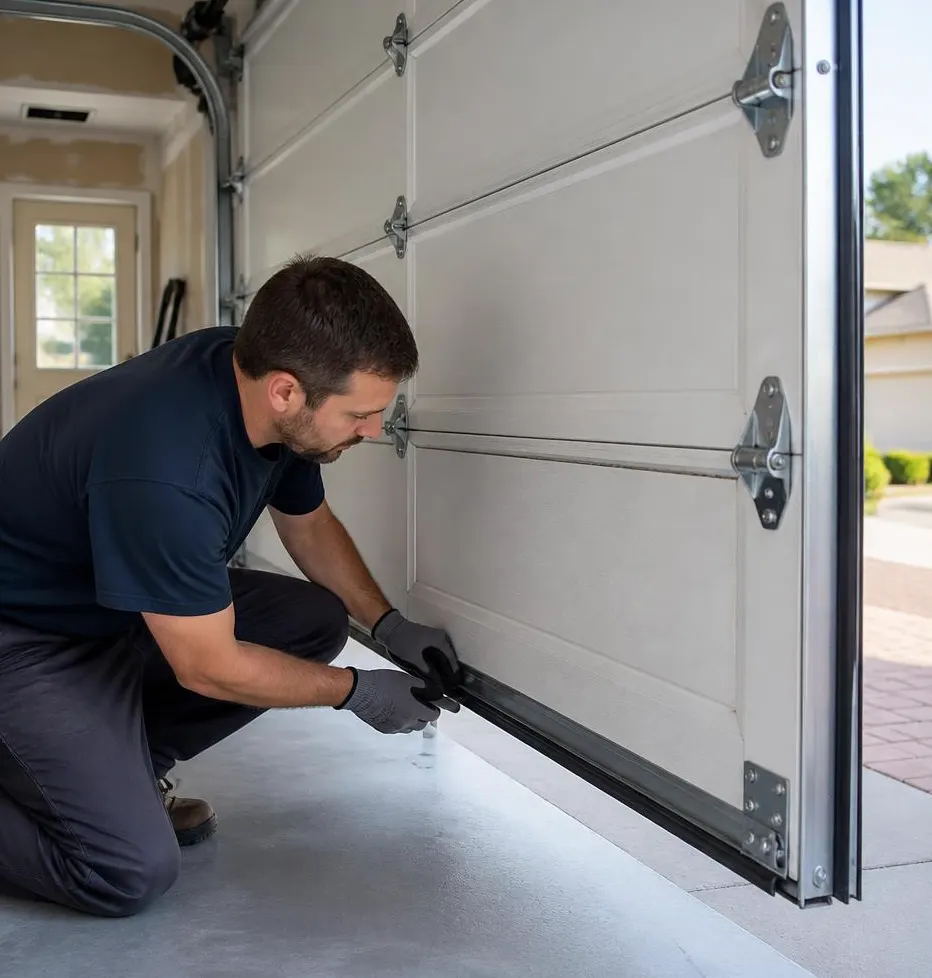
What a Technician Sees on This Kind of Call
The call usually starts with one spouse convinced the garage door is the problem and the other sure it's just an old house. On the visit, the pattern is almost always the same: daylight visible along the bottom of the door even when it's closed, brittle or missing weatherstripping around the sides, a steel door with zero insulation inside the panels, and a laundry room or home office built right next to the garage wall sharing a thin layer of drywall. Sometimes there's a water heater or the HVAC air handler sitting in the garage too, with ductwork running along the ceiling. Put a hand near the bottom corners and you can usually feel air moving.
Why This Actually Affects the House, Not Just the Garage
An attached garage isn't a sealed box—it shares at least one wall, and often a ceiling, with living space. When the garage door leaks air, the garage stops acting like a buffer and starts acting like an extension of the outdoors. In summer, a hot, sun-baked garage pushes heat through that shared wall into the house. In winter, a cold, damp garage pulls warmth out the same way. Your HVAC system then has to work harder to compensate, whether or not the thermostat is anywhere near the garage.
It gets worse if ductwork or an air handler lives in the garage. Leaky doors let in outside air, dust, and temperature swings that affect the air moving through those ducts before it even reaches the rooms you're trying to heat or cool.
The Simple Version for the Argument
Picture the garage door as a fourth exterior wall of the house. If that wall has a one-inch gap along the bottom and worn seals on the sides, it's no different than leaving a window cracked open in the room next door, every single day, all year.
Signs the Door Is the Culprit
- Visible daylight or a draft along the bottom seal when the door is fully closed
- Weatherstripping that's cracked, flattened, or peeling away from the frame
- A metal door that feels cold to the touch in winter and hot in summer, with no insulation layer inside
- Dust or dry-season debris collecting just inside the garage near the door edges
- A noticeable temperature difference between the garage and the rest of the house
Local Timing Makes This Worse
With winter rain moving in, a leaky bottom seal doesn't just let in cold air—it lets in moisture, which can warp wood doors or rust steel ones over time. Earlier in the dry season, Santa Ana wind events push dust and wildfire smoke through the same gaps. Either way, the door is the weak point in both directions: heat and dust in the dry months, cold and damp in the wet ones.
What Actually Fixes It
- Replace worn weatherstripping on the bottom and sides—this is often the single biggest fix for the smallest cost
- Add or replace the bottom astragal seal if it's cracked, flattened, or no longer making contact with the ground
- Check for panel warping, especially on older wood or uninsulated steel doors that have taken sun and rain cycles for years
- Consider an insulated replacement door if the current one is a single-layer steel panel with no core—this matters most if the garage shares a wall with a bedroom, office, or laundry area
- Seal the service door and any vents leading from the garage into the house, since those are often overlooked while all the attention goes to the big door
When to Call Lincoln Heights Garage Door
If weatherstripping is worn, the door doesn't sit flush at the bottom, or you're hearing rattling along with the draft, that's a straightforward garage door repair visit—often resolved in one trip with new seals and a hardware check. If the door itself is old, warped, or was never insulated to begin with, it's worth discussing a garage door installation with an insulated panel option, especially if HVAC equipment or living space sits right next to it. We also build this into our preventive maintenance visits, since seals and alignment drift over time and catching it early avoids a bigger energy drain down the road.
If your garage door is leaking air, dust, or rain into the house, call Lincoln Heights Garage Door and we'll take a look before the rain season sets in for good.